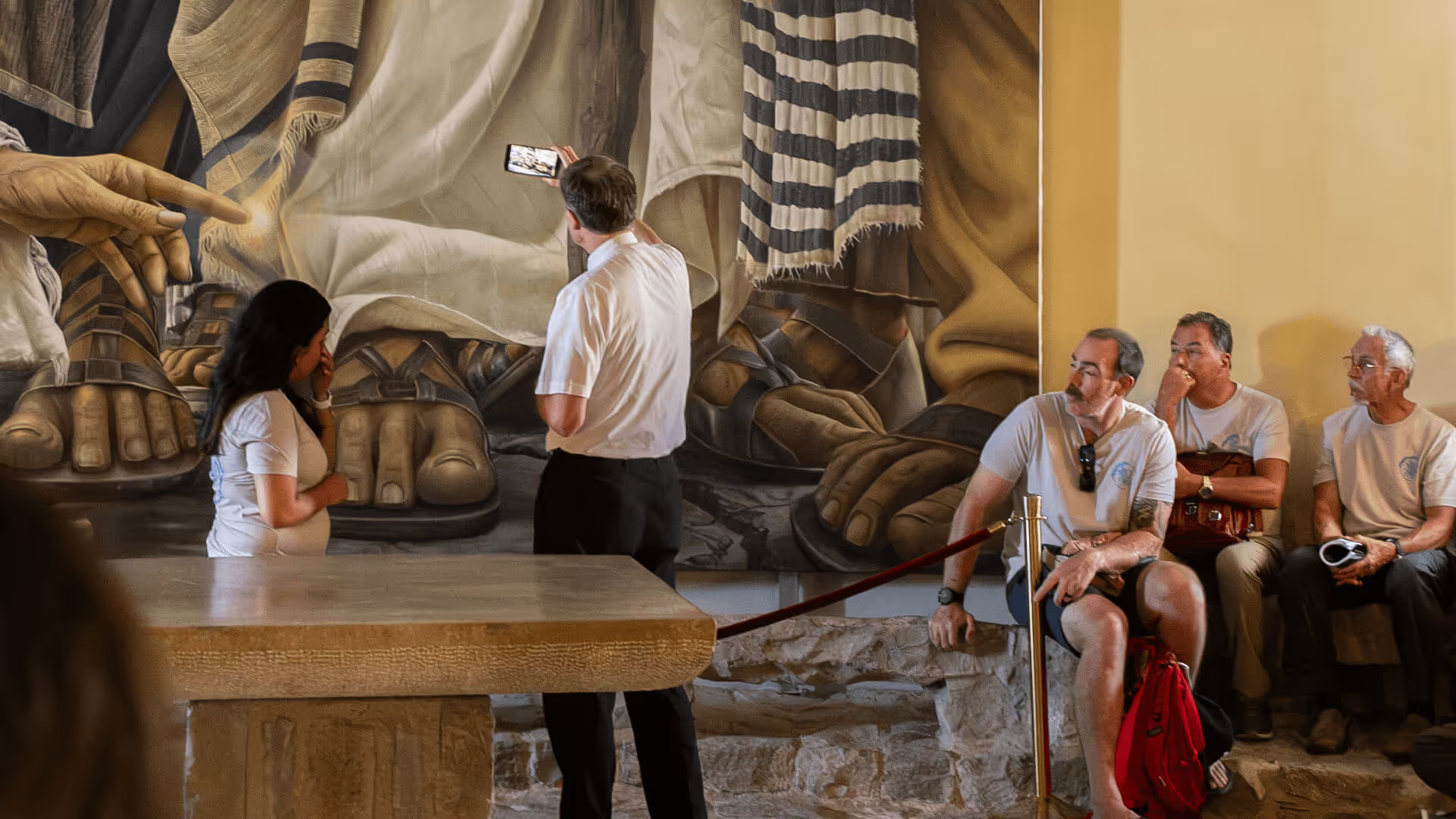
As someone blessed to serve both at Magdala and at the Notre Dame of Jerusalem Center, I have often found myself returning again and again to one of the most striking spaces in the Holy Land to reflect on the coming of the Holy Spirit in Jerusalem: the Pentecost Room. Over the years, I have had the privilege of studying its artwork in conversation with the artist, Daniel Cariola, praying within it, guiding pilgrims through its symbolism, and reflecting deeply on the theological meaning woven into every figure and gesture represented there. Each visit reveals something new.
The Pentecost Room is not simply a depiction of a biblical event from the past. It is a living invitation into the mystery of the Holy Spirit — an invitation to encounter the same Spirit who descended upon Christ, filled the Apostles, and continues to animate the Church today.
At the heart of the room stands the great prophecy of Isaiah:
And the Spirit of the Lord shall rest upon him: a spirit of wisdom and understanding, a spirit of counsel and strength, a spirit of knowledge and piety, and his delight shall be the fear of the Lord. (Isaiah 11:2–3)
These words come alive throughout the Pentecost Room. Every face, every posture, every interaction among the disciples reflects one of the gifts of the Holy Spirit.
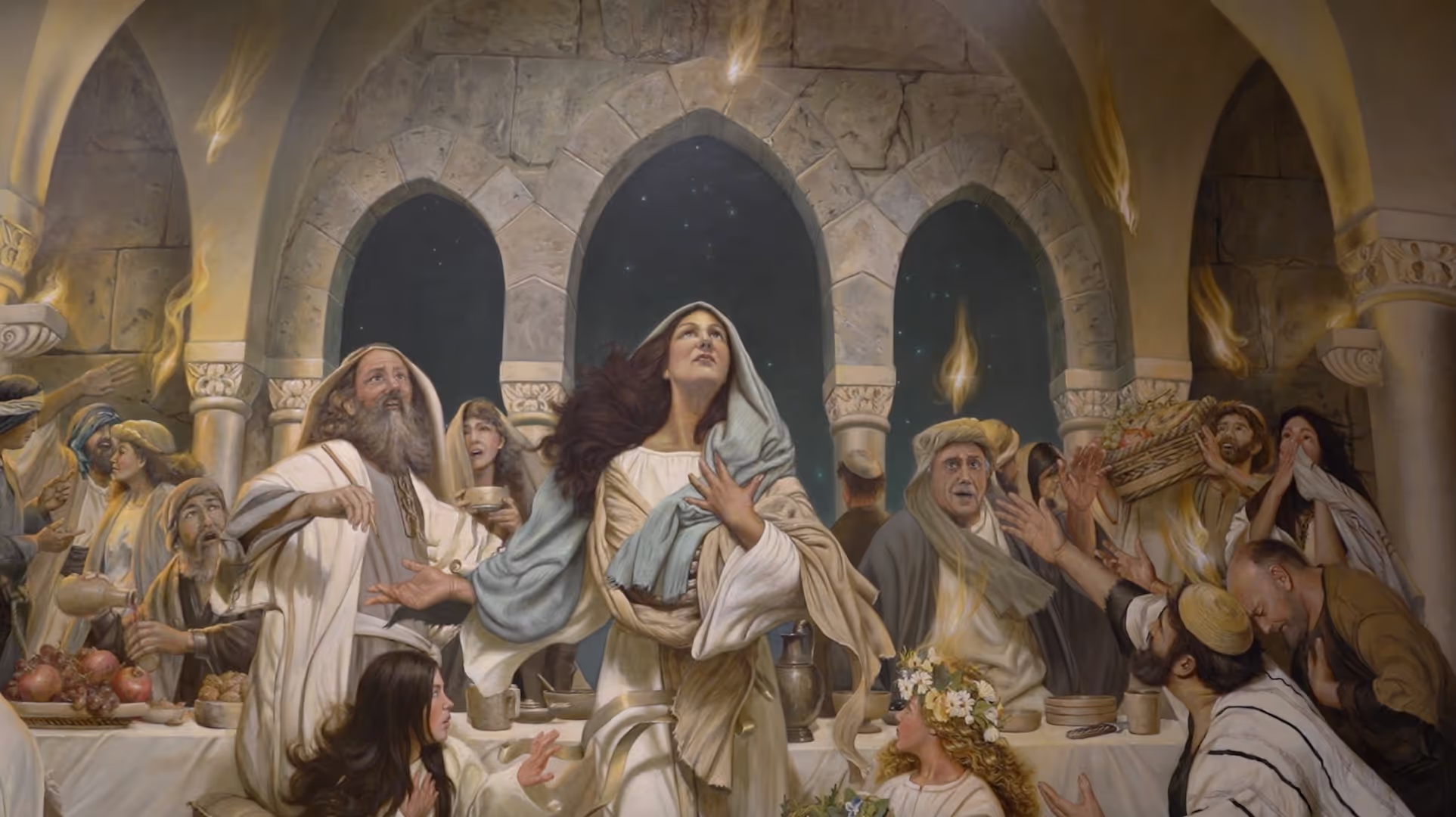
At the center of the room, the Holy Spirit descends like a dove from the Father above, radiating divine light and fire upon those gathered below. I often tell pilgrims that this image is not simply symbolic decoration. It reveals the fulfillment of God’s promise. The Spirit who rested upon Christ at the Jordan River is now poured out upon the Church.
What moves me most is that the Spirit descends not only upon isolated individuals, but upon a community gathered together in prayer. Pentecost is the birth of communion, of the Church. As Saint Paul reminds us, “we, though many, are one body in Christ, and individually parts of one another” (Romans 12:4–5). The Holy Spirit gathers humanity into the living Body of Christ.
Wisdom and Understanding
One of the first things I encourage visitors to notice is the expressions on the faces of the Virgin Mary, Peter, Mary Magdalene. Their faces seem illuminated from within, reflecting both a sort of familiarity with the Holy Spirit descending upon them and an awakening to the entirely new reality unfolding — the fulfillment of God’s promise and the birth of a new creation through the living presence of the Spirit.
Isaiah speaks first of “a spirit of wisdom and understanding.” In biblical thought, wisdom is not simply intelligence. It is the grace to see life through the eyes of God and to love what is eternal. Understanding goes even deeper: it is the ability to perceive God’s presence beneath the surface of ordinary life.
The longer I contemplate this room, the more I realize how desperately our world needs these gifts today. We are constantly tempted to see others through judgment, fear, distraction, or division. But the Holy Spirit teaches us to see as Christ sees.
The Pentecost Room reminds me that the same Spirit who enlightened the Apostles desires to transform our vision as well.
Counsel and Strength
One section of the room has always fascinated me personally. To the far right of Mary Magdalene and Lazarus sit Mary the wife of Clopas and her husband, reflecting upon their encounter with the risen Christ on the road to Emmaus. Seated in front of them is Nicodemus who seems to have been engaged in lively discussion with the two. In this moment, he turns toward the descending Spirit with an expression of surprise and wonder, and the conviction that the Scriptures are being fulfilled at that very moment.
Whenever I stand before these figures, I am struck by the humanity in their faces. They seem to stand at the threshold between fear and faith.
Isaiah describes “a spirit of counsel and strength.” Counsel is the Spirit’s gift of discerning the right path according to God’s wisdom. Strength — or might — is spiritual courage: the grace to remain faithful even when discipleship becomes difficult.
As I guide visitors through this room, I often reflect on how the Holy Spirit does not eliminate suffering or uncertainty from our lives. Instead, He gives us the courage to continue walking faithfully through them.
I believe this is one of the great messages of Pentecost for our time: God still guides His people. The Spirit still strengthens weary hearts, illuminates difficult decisions, and gives courage when faith feels costly.
Knowledge and Piety
Another detail I love sharing with pilgrims is the relationship between the young John Mark and Simon Peter’s mother-in-law seated nearby holding hands.
John Mark’s intense gaze suggests someone captivated by the mystery unfolding before him, deeply attentive to the presence of God. Beside him, Peter’s mother-in-law radiates tenderness, warmth, and peaceful devotion.
Together, they beautifully embody what Isaiah calls “a spirit of knowledge and piety.”
In Scripture, knowledge is not merely information about God. It is recognizing His presence and action within daily life. Piety, meanwhile, expresses the loving affection of a child toward a loving Father.
The more I grow in my own faith, the more I realize these gifts must remain united. Knowledge without love can become cold and prideful. Devotion without truth can become shallow. The Holy Spirit draws both together into authentic communion with the Father.
This is what I believe the Pentecost Room reveals so beautifully: Christianity is not simply learning truths about God. It is entering into relationship with Him.
Fear of the Lord
Perhaps the most misunderstood gift represented in the room is the fear of the Lord.
I often direct visitors toward the figure of the Apostle Philip, seated toward the far left of the ‘Mary Magdalene Wall’ with his hand partially covering his face that is turned slightly away. His posture conveys humility, awe, and reverence before the overwhelming mystery unfolding around him.
In biblical thought, the fear of the Lord is not terror or fear of punishment. It is loving reverence before the holiness of God — the deep desire never to be separated from Him.
Philip’s posture always brings me back to his words at the Last Supper: “Master, show us the Father and that will be enough for us” (John 14:8).
At Pentecost, that longing begins to find fulfillment. The Holy Spirit draws Philip — and each of us — into deeper communion with the Father.
The more time I spend in the Pentecost Room, the more I experience through those who visit that Pentecost is not a past event to admire from a distance. It is a living reality. The Holy Spirit continues to descend upon the Church today, awakening hearts, healing divisions, illuminating minds, and drawing souls into communion with Christ.
Every time I leave this room, I carry with me the same prayer: that I may become more open to the action of the Holy Spirit in my own daily life.
That is ultimately the invitation the Pentecost Room offers to every pilgrim who enters.
May we open ourselves more fully to the Holy Spirit — allowing Him to awaken within us wisdom and understanding, counsel and strength, knowledge and piety, and the joyful fear of the Lord. May the Spirit transform the way we see, love, forgive, serve, and live.
And may we carry the fire of Pentecost into our homes, workplaces, families, and communities so that the world may encounter, through us, the living presence of God.
Come, Holy Spirit!
Fill the hearts of your faithful
and enkindle in them the fire of your love.
Send forth your Spirit
and they shall be created,
and You shall renew the face of the earth!
Discover more articles from this category