Once again, we dedicate this entry to exploring the publication Ancient Magdala: Archaeological Excavations (2010–2017), Volume I: Daily Life, First Interpretations, which brings together the results of the first seven years of archaeological excavations at Magdala. This time, we present the chapter Chalk Vessels Found at Magdala: The Finds and Their Ritual Context, written by Yonatan Adler.
Yonatan has been closely connected to the Magdala Archaeological Project since 2016, and his advice and guidance have been greatly appreciated by the team of archaeologists. Miqva’ot — ritual baths used for purification — and chalk-stone vessels have been among his main areas of interest, particularly for understanding ritual practices and expressions of identity among Jewish communities in the first century CE.
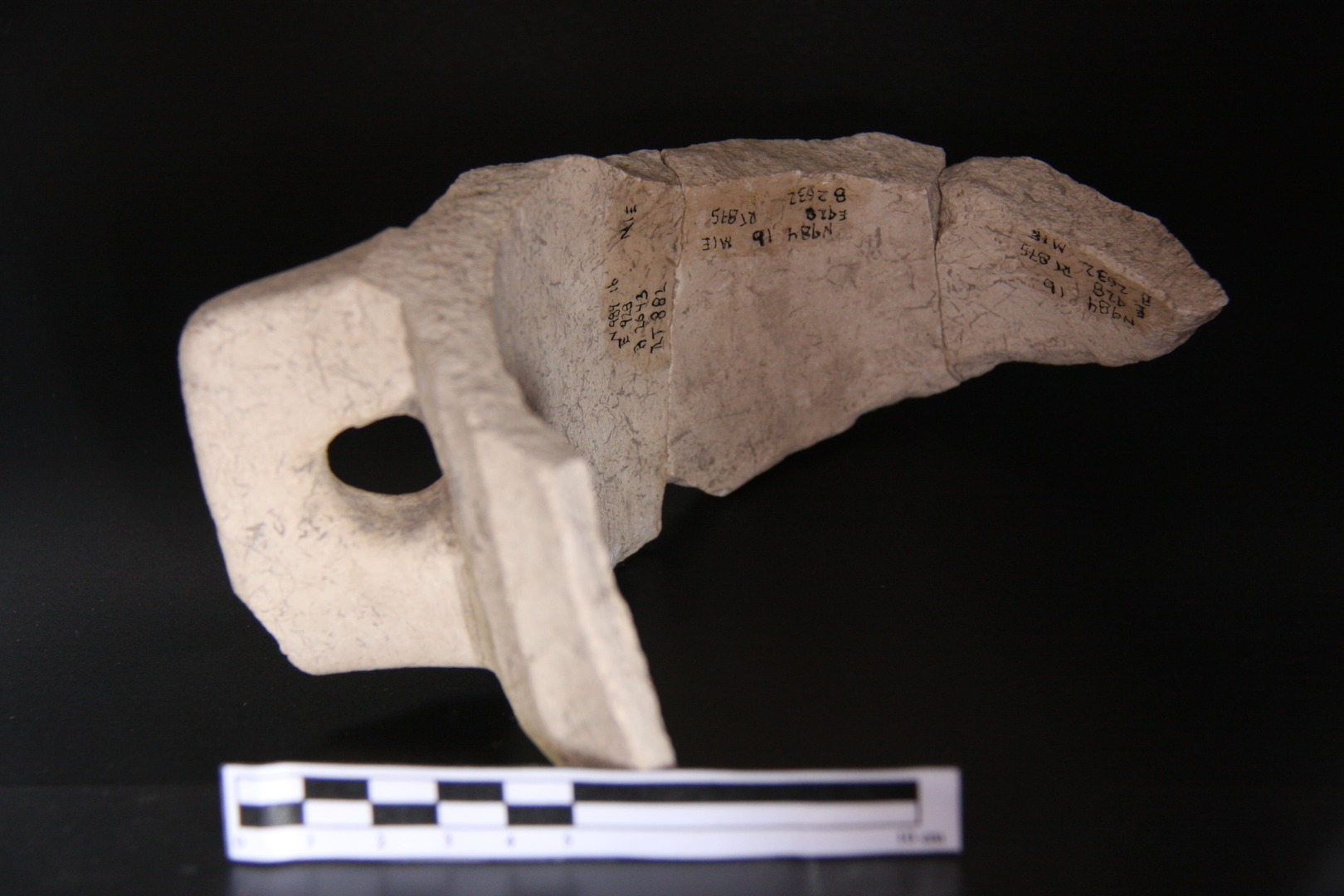
In this chapter, the author explains that chalk-stone vessels became part of everyday Jewish life from the late second century BCE and continued to be used until the middle of the second century CE. For his study, he examined 113 vessel fragments found at Magdala and classified them according to two main manufacturing techniques: vessels carved by hand and vessels made on a small lathe.
Chalk-stone vessels came in a wide variety of shapes. The classification presented by the author shows that Magdala had a diverse range of these objects, each serving different needs in everyday life. At the same time, the use of chalk stone was connected to Jewish purity laws, since this material was not susceptible to ritual impurity in the same way as other materials.
Among the forms identified are:
Hand-carved vessels:
- Mugs
- Small pitchers
- Bowls without handles or spouts
Vessels made on a small lathe:
- Up to seven different types of bowls
- Inkwells
- Hole-mouth jars
The author also discusses the production of these vessels in Judea and Galilee, their dating, and what their presence at Magdala can tell us about ritual purity practices and everyday life in the community.
We invite you to learn more about this chapter and the publication in upcoming editions of our newsletter, where you can consult Volume I and discover the results of the first seven years of excavations at Magdala, directed by the Mexican expedition.
Discover more articles from this category